
Cats together
Cats fighting at home: why it happens and what helps
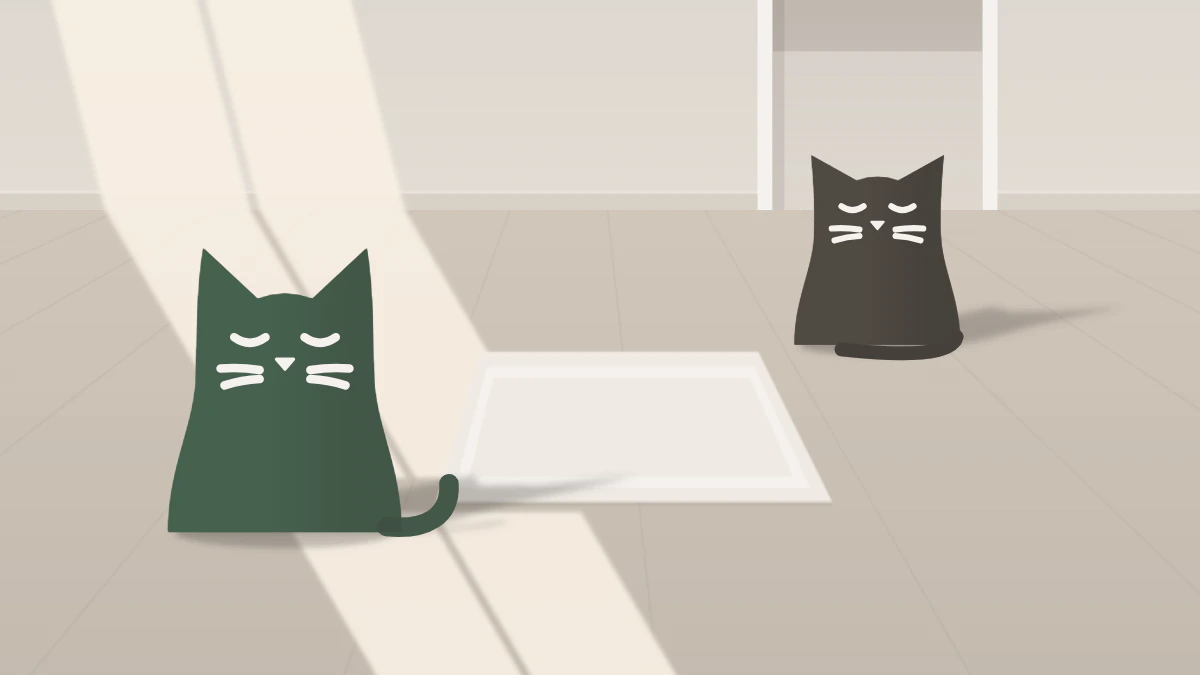
Two cats who once slept curled together now can’t pass in the hallway without a hiss. Or a new cat arrived three months ago, and the house still hasn’t settled. Living with cats who don’t get on is tiring for everyone, and it’s hard to know what to do.
Here’s what’s usually going on, and where to start.
Is it play, or a fight?
Cats play rough, especially young ones, so the first question is whether there’s a problem at all.
Play is usually quiet. The cats take turns chasing and being chased, ears stay forward, claws stay mostly in, and afterwards they go back to whatever they were doing, sometimes side by side.
A fight is louder: growls, hisses, yowls. Ears go flat, fur puffs up, and one cat is clearly trying to get away. Afterwards they avoid each other, and you may find tufts of fur.
The tension you don’t hear
Not all conflict is noisy. Some of the most stressful situations look peaceful from the sofa:
- one cat sitting in a doorway or a hallway, and the other waiting to pass;
- long, still stares across a room;
- one cat eating, or using the box, only when the other isn’t around;
- one cat living mostly on top of a wardrobe, or in one room;
- peeing or spraying outside the box in a home where it didn’t happen before.
If you recognise these, your cats may not be fighting, but they’re not at ease either.
Why cats who got on can fall out
Cats can live together happily, but they don’t need company the way we do. Many share a home the way neighbours share a building: politely, on their own terms, with their own space. When that space gets squeezed, tension builds.
Common triggers:
- Too few resources, too close together. One feeding spot, one box, one sunny windowsill, and two cats who both need them, every day.
- A cat growing up. Somewhere between one and four years old, many cats start to claim more of the home.
- A cat outside. An indoor cat who sees a stranger at the window can get worked up and take it out on the nearest cat, which is usually the one they live with.
- A smell from outside. A cat back from the vet or a cattery can smell so different that the other doesn’t recognise them.
- A change at home. A move, a new person, building work, new routines.
- A rushed introduction. New cats who are put together on day one often get off on the wrong foot, and the first impression lasts.
What to change this week
- Spread things out. Separate food and water bowls, out of sight of each other. One box per cat, plus one, in different rooms. More beds, more scratching posts, more places to watch from.
- Go up. Shelves and cat trees give a second level, so cats can share a room without sharing the floor.
- Remove dead ends. Make sure no box, bowl or bed has only one way in and out.
- Play with each cat separately. A few minutes a day with a wand toy burns off energy that might otherwise turn into chasing.
- Don’t force friendship. No feeding side by side, no holding them together. Let them choose the distance.
- Never punish. Telling a cat off for hissing adds to their stress, and can make them link the other cat with something bad.
How to break up a fight safely
Never use your hands. A cat in a fight can’t tell you from the other cat. Make a sudden noise, clap, or slide a cushion or a piece of cardboard between them. Then let them go to separate rooms, and leave them alone until they’ve calmed down, which can take hours.
If fights happen often, give each cat their own part of the home for a while. Then bring them back together slowly: swap their bedding so they get used to each other’s smell, feed them on either side of a closed door, and only let them see each other once both are eating normally. It’s slow, and it works best with a plan.
When to get more help
If someone gets hurt, if one cat has stopped eating or using the box, or if things are getting worse despite your changes, it’s time for more help: your vet first, then a feline behaviour specialist.
The guide
For cats who share a home, but not comfortably
The Stressed Cat, our guide, has a track for aggression towards other animals or people. It starts with the vet, then takes you step by step: read who goes where, reset the home one change at a time, and review what changed. A PDF and 14 daily emails, one step a day.
Not ready for a full plan? The free preview of our guide explains how stress shows up at home, in plain words.