
Litter box
Why is my cat peeing outside the litter box?
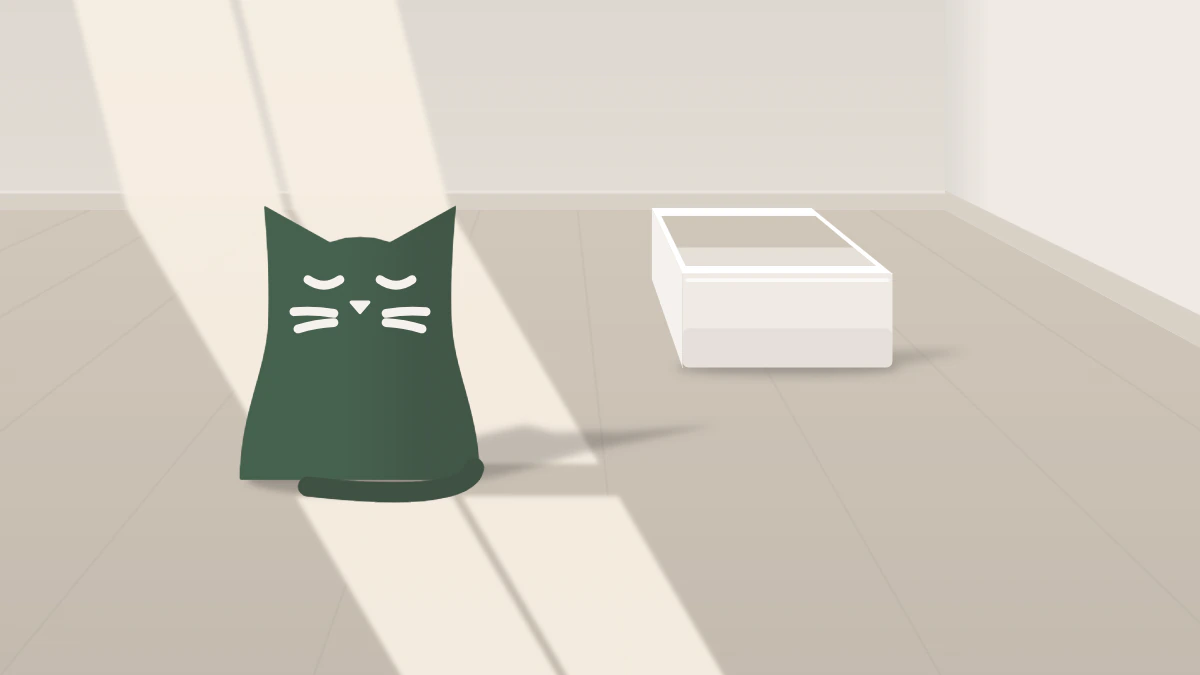
You step out of bed onto a wet bath mat. Or you find the corner behind the sofa, again. Your cat has used the same box for years, and now, it seems, they’ve decided not to.
It’s one of the most frustrating things that can happen with a cat, and one of the most common. The good news is that it almost always has a reason. The less good news is that the reason is rarely the first one you think of.
First: could it be medical?
Before you change anything at home, rule out a medical cause. Cats with a urinary problem often link the box with discomfort, and start going elsewhere. Older cats with stiff joints may find a high-sided box hard to climb into.
Book a vet visit if your cat:
- has started suddenly, after years of using the box;
- strains, goes very often, or passes only small amounts;
- cries or seems uncomfortable while going;
- has blood in their urine, or is licking their back end a lot;
- is drinking more, eating less, or seems unwell in any way.
A male cat who strains and passes little or no urine needs a vet urgently, the same day.
If your vet finds nothing, they may tell you it’s “behavioural”. The rest of this article is about what that means.
Peeing or spraying?
It helps to know which of two things you’re seeing.
A cat who pees squats and leaves a puddle, usually on a flat, soft or absorbent surface: a rug, a bed, clothes, a bath mat. This is most often about the toilet itself. Your cat needs to go, and something about the box, or the route to it, has put them off.
A cat who sprays stands with their back to something upright, a wall, a curtain, the side of the sofa, and leaves a small amount at about nose height, often with a quivering tail. This is a message, usually about territory: “this part is mine”. Unneutered cats spray far more, so if yours isn’t neutered, talk to your vet about it.
Stress can play a part in both. Neither is spite.
Five common reasons
1. The box doesn’t suit your cat. Many boxes are too small. A good rule of thumb is one and a half times your cat’s length, from nose to the base of the tail. Lids keep smells in, which suits us better than it suits them, and can make a cat feel trapped. Scented litter, liners and a box that isn’t scooped every day can all be enough to put a cat off.
2. The box is in the wrong place. Cats want privacy, but also a view of who’s coming and a way out. A box in a busy hallway, next to the washing machine, or in a corner where another pet could block them, can feel unsafe. So can a box next to the food bowl.
3. Something has changed. A move, a new sofa, building work, a new person, a baby, a holiday, new working hours. Changes we hardly notice can unsettle a cat for weeks.
4. Another cat. In a multi-cat home, one cat may quietly guard the box, or the corridor that leads to it. The usual advice is one box per cat, plus one, in different places. Two boxes side by side count as one.
5. Something outside. A cat in the garden or at the window can unsettle an indoor cat enough to start spraying near doors and windows, to say “keep out”.
It’s normal for more than one of these to apply. Often it’s a few small things together, until one more is too many.
What to do starting today
- Don’t punish. Shouting or “showing them” the puddle teaches your cat to fear you, not to use the box. They’ll just go somewhere more hidden.
- Clean the spot properly. Use an enzymatic cleaner made for urine, not bleach or ammonia, which can smell like urine to a cat. Let it dry on its own, and keep your cat away until it does.
- Look at the box with fresh eyes. Size, lid, litter, how clean it is, where it is. Change one thing at a time, so you can see what helps.
- Add a box. Somewhere quiet, with a view, away from food. In a multi-cat home, aim for one per cat plus one.
- Notice the pattern. Where, when, and what happened just before. A few days of notes tell you more than a month of guessing.
When to get more help
If you’ve ruled out a medical cause and tried the basics, and it’s still happening, it’s usually because the main reason hasn’t been found yet. That’s normal. It’s also exactly what a step-by-step plan is for.
Free preview
Get the free preview
The first five pages of The Stressed Cat: the full glass, the vet checklist with the signs that mean a call today, and one small, safe thing to try today. Free, no email needed.
Ready for a full plan? The Stressed Cat, our guide, will take you from the vet check to a new routine, one step a day, on its litter box track: a PDF and 14 daily emails. Sales open soon.