
Scratching
Why does my cat scratch the furniture? (And how to save the sofa)
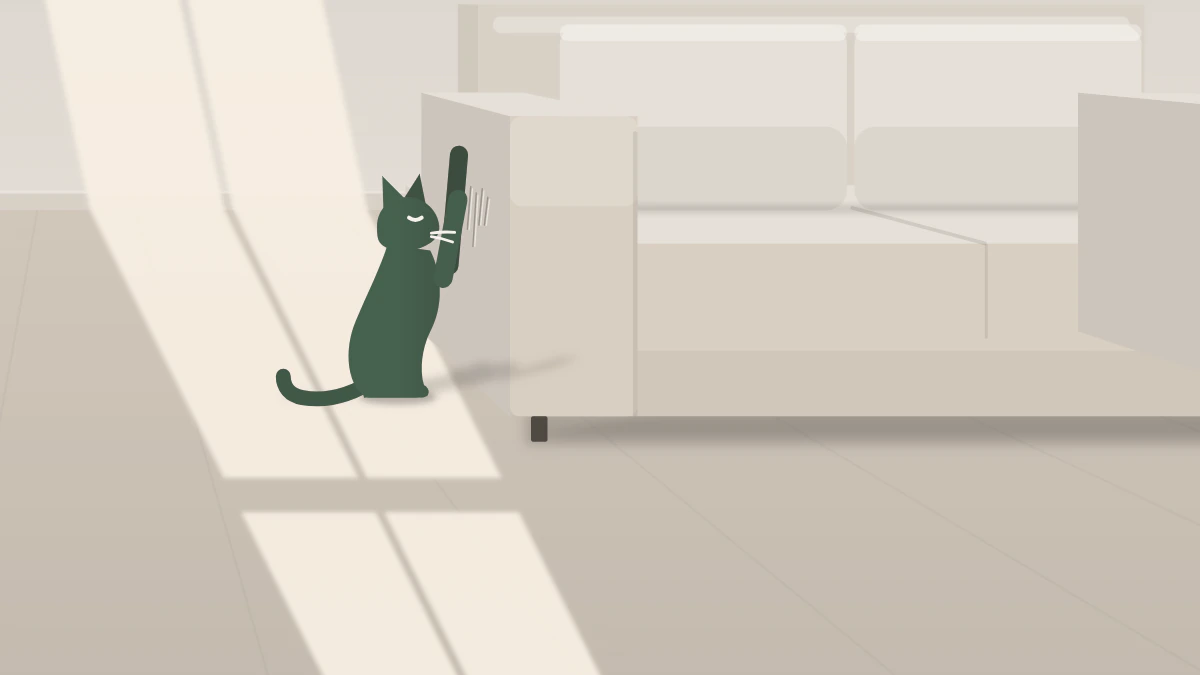
The new sofa has been home for a fortnight, and one arm already looks like it’s been through a hedge. Meanwhile the scratching post you bought stands by the wall, untouched, like a piece of modern art.
If this sounds familiar, you’re in very good company. And the answer isn’t to stop your cat scratching. It’s to understand why they chose the sofa.
Why cats scratch at all
Scratching isn’t bad behaviour. It’s built in, and it does three jobs at once.
Claw care. Each claw grows in layers. Scratching pulls off the old outer layer and keeps the claw in working order.
Stretching. A good scratch stretches the whole body, from the toes to the back. That’s why many cats scratch straight after a nap.
Leaving a message. Cats have scent glands between the pads of their paws. When they scratch, they leave their scent and a visible mark: a signpost that says “I live here, and this matters to me”.
You can’t, and shouldn’t, stop any of these. What you can do is offer a better place for them.
Why the sofa wins
Think about the signpost job. Where would you put a sign that everyone in the household will see? Somewhere central, somewhere people walk past, somewhere that smells of the family. The sofa is perfect. So are doorways, the top of the stairs, the side of the bed and the rug in the hall.
Now think about the post. Often it’s:
- too short, so your cat can’t stretch out fully;
- too light, so it wobbles or tips when they pull;
- the wrong material, soft carpet instead of something your cat can really dig into, like sisal rope;
- the wrong direction, upright when your cat prefers to scratch flat along a rug, or the other way round;
- in the wrong place, in a quiet corner where it’s out of the way. Which is exactly what your cat doesn’t want.
How to move the scratching off the sofa
- Put the post right next to the sofa. Directly in front of the scratched arm. Once your cat uses it, you can move it gradually, a little at a time, to where you’d like it.
- Choose tall and heavy. Your cat should be able to stretch fully, and the post shouldn’t move at all when they pull. If they scratch rugs, add a flat scratcher on the floor.
- Match what they like. Look at what they scratch now. Rough, upright fabric? Sisal rope on a tall post. A carpet? A flat cardboard or sisal mat.
- Add one where they sleep, and one near the front door if they scratch there when you come home.
- Make the post interesting. Drag a wand toy over it, scatter a few treats at its base, and praise your cat when they use it.
- Protect the sofa for a while. A thick throw over the scratched spot, or a piece of furniture in front of it, while the new habit forms.
What not to do
Don’t shout, clap or spray water when your cat scratches. It doesn’t teach them where to scratch. It teaches them to be nervous around you, and to scratch when you’re not there.
And don’t take away the chance to scratch altogether. A cat who can’t scratch has lost one of the main ways they look after themselves and say “this is home”.
When scratching is about stress
If your cat has started scratching much more than usual, or in new places, especially near doors and windows, it can be a sign that something has unsettled them. A new cat in the home, a cat outside, a move, building work or a change in routine can all make the signpost job feel more urgent.
In that case, a better post will help the sofa, but the real question is what changed. Look for the pattern: where, when, and what happened just before.
A quick word on claws
Trimming the tips of your cat’s claws makes scratches do less damage while you work on the rest. Your vet can show you how to do it safely, without cutting too far.
The guide
The guide, for scratching furniture
The Stressed Cat, our guide, has a track for scratching furniture. It takes you step by step: rule out medical causes, read where and why your cat scratches, reset the home one change at a time, and review what changed. A PDF and 14 daily emails, one step a day.
Not ready for a full plan? The free preview of our guide explains how stress shows up at home, in plain words.